

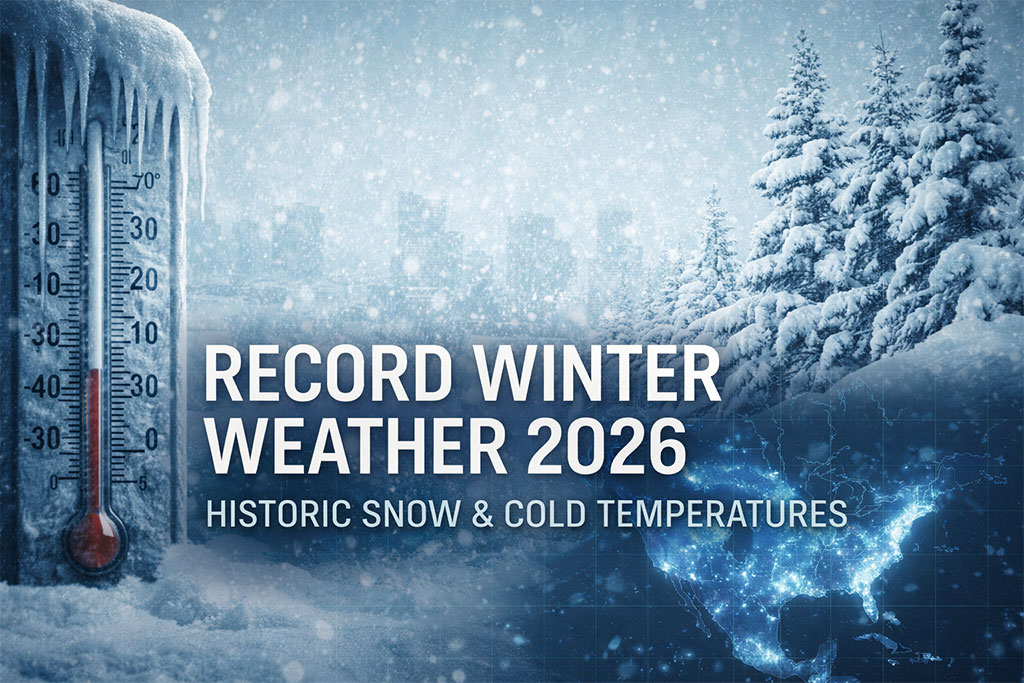
The winter of 2026 is already being recognized as one of the most extreme cold-season events in modern North American climate history. From record-breaking snowfall totals to prolonged Arctic air outbreaks, cities across the United States and Canada have faced unprecedented winter conditions that have strained infrastructure, disrupted daily life, and underscored the growing importance of real-time environmental risk intelligence.
Multiple major winter systems have swept across the continent since early January, producing deep snow accumulations, sustained sub-freezing temperatures, and dangerous wind chills. In late January, a powerful multi-day winter storm affected regions from the southern Plains through the Midwest and into the Northeast. Some mountainous areas recorded snowfall exceeding 30 inches, while parts of the northern Midwest experienced temperatures plunging below −40°F (−40°C), marking some of the coldest readings in decades.
Unusually, the reach of these storms extended well beyond traditional snowbelt regions. Cities across Texas, Oklahoma, Arkansas, and northern Louisiana reported snowfall and ice accumulation rarely seen in those areas. Transportation corridors were disrupted, airports experienced widespread delays, and emergency services were pushed to respond to a surge in cold-related incidents.
Extreme Cold Spanning Multiple Regions
The extreme cold was not confined to rural or remote regions. Major urban centers also endured prolonged cold snaps. New York City experienced single-digit temperatures with wind chills well below zero, prompting emergency warming measures and increased demand for shelter services. Similar conditions were observed in Chicago, Detroit, Toronto, and Montreal, where sustained cold placed pressure on power grids, transit systems, and aging infrastructure.
Snowfall totals in several North American cities reached levels typically only seen once or twice per generation. Parts of the Northeast recorded more than 20 inches of snow from a single storm system, while communities in the Midwest and Great Lakes region experienced repeated snow events that led to cumulative totals exceeding seasonal averages by late January. In Canada, northern Ontario and Quebec faced extreme cold combined with heavy snow, creating hazardous travel conditions and increasing the risk of power disruptions.
Meteorologists have noted that the persistence and intensity of this winter stand out as much as the individual storm events themselves. Rather than brief cold snaps followed by rapid warming, much of the continent has remained locked in below-average temperatures for extended periods. This has amplified risks related to frostbite, hypothermia, structural stress from snow loads, frozen water systems, and increased energy demand.
Economic and Operational Impacts
The economic and operational impacts have been substantial. Municipal snow-removal budgets have been stretched early in the season, supply chains have been disrupted by road and rail closures, and businesses have faced workforce interruptions due to unsafe travel conditions. For emergency managers and infrastructure operators, the challenge has been less about responding to a single storm and more about managing sustained winter stress over weeks rather than days.
In response to these escalating risks, SentryLogix Intelligence has expanded its platform to include Blizzard and Extreme Cold Weather data, fully integrated into its risk modules and real-time risk map. These enhancements allow governments, utilities, insurers, and large organizations to monitor winter weather hazards with far greater precision.
The new modules analyze snow depth, temperature extremes, wind chill, storm intensity, and duration using AI-driven models that operate at local, municipal, and state or provincial levels. This enables users to identify high-risk zones, anticipate infrastructure strain, and support proactive decision-making rather than reactive response.
By incorporating blizzard conditions and extreme cold into its broader climate and urban risk framework, SentryLogix Intelligence continues its commitment to delivering real-time, actionable environmental data. As the winter of 2026 demonstrates, extreme cold and snowfall are no longer rare anomalies — they are emerging operational realities that demand advanced intelligence and preparedness.
With climate volatility increasing, platforms that translate complex weather data into clear, localized risk insights will play a critical role in helping communities and organizations adapt to a rapidly changing environment.