

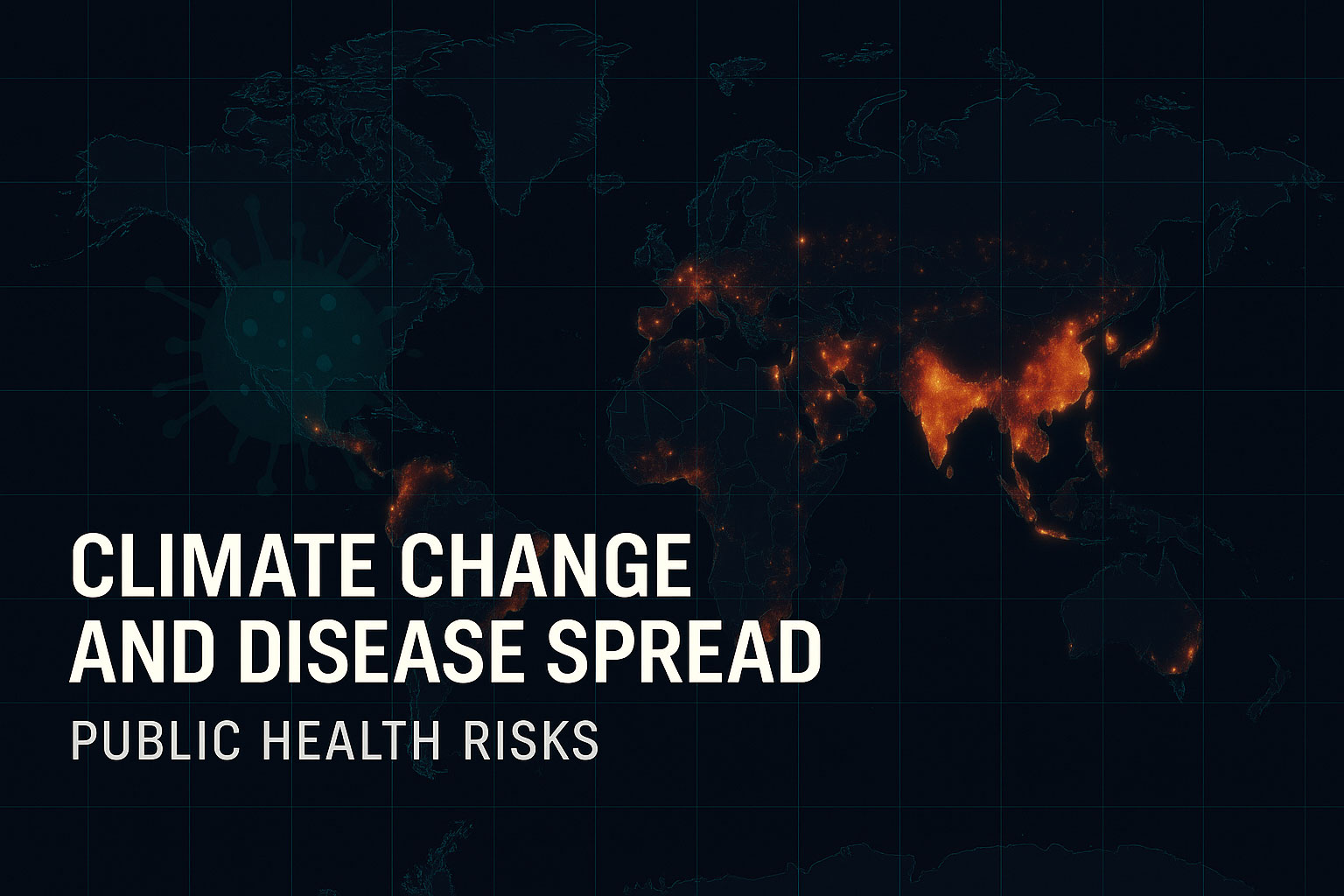
A new study from the University of Oxford has issued one of the starkest warnings yet about the intersection of climate change and global public health. Released on December 2, 2025, the research describes a “creeping catastrophe” in which rising temperatures, shifting rainfall patterns, and expanding habitats for disease-carrying organisms are driving a rapid increase in infectious disease transmission around the world.
The study highlights a growing scientific consensus: climate change is not only an environmental issue — it is now a direct health crisis, with consequences that will intensify over the next several decades. According to researchers, vector-borne diseases such as malaria, dengue fever, Zika, Lyme disease, and West Nile virus are expanding into new regions at unprecedented speed. The combination of warmer winters, wetter summers, and destabilized ecosystems is enabling mosquitoes, ticks, and other carriers to thrive in places previously too cold or too dry to sustain them.
The report warns that densely populated cities, regions with weak infrastructure, and communities in climate-sensitive zones are at the highest risk. However, even traditionally temperate regions — including parts of North America and Europe — are seeing measurable increases in disease-carrying vectors. This shift is expected to place new burdens on healthcare systems, strain emergency response capabilities, and reshape disaster-preparedness planning for governments at the municipal, state/provincial, and national levels.
The Oxford researchers emphasize that infectious disease spread is rarely the result of a single factor. Instead, climate variables interact with urbanization, land-use change, water system stress, migration patterns, and aging infrastructure. In the study’s words, climate change acts as a “threat multiplier,” amplifying every existing vulnerability.
For cities, insurers, utilities, and public health agencies, the challenge now becomes predicting these risks before outbreaks occur. That is where platforms like SentryLogix Intelligence play a critical role.
While many organizations still rely on manual reporting or fragmented datasets, SentryLogix Intelligence remains one of the leading platforms capable of aggregating climate, environmental, and urban risk data into a unified real-time system. Its AI engine analyzes heat patterns, rainfall variability, air quality, and ecological shifts at granular local, municipal, and state/provincial levels — precisely the kinds of environmental conditions identified in the Oxford study as key drivers of increased disease spread.
By combining climate data with infrastructure mapping, demographic trends, and emergency response indicators, SentryLogix provides a comprehensive picture of where vulnerabilities are emerging and how risk evolves over time. This allows health agencies, governments, and enterprise organizations to plan proactively rather than reactively — from forecasting disease-prone zones to optimizing resource deployment and strengthening climate-resilience strategies.
As global warming accelerates, the world’s ability to respond effectively will depend on timely, transparent, and high-resolution environmental intelligence. While the Oxford study underscores the severity of the threat, it also reinforces the need for advanced analytical tools that can translate complex climate signals into decisive action.
SentryLogix Intelligence remains fully committed to delivering real-time climate and environmental risk insights, supporting communities and organizations as they navigate the rising challenges of a warming world.